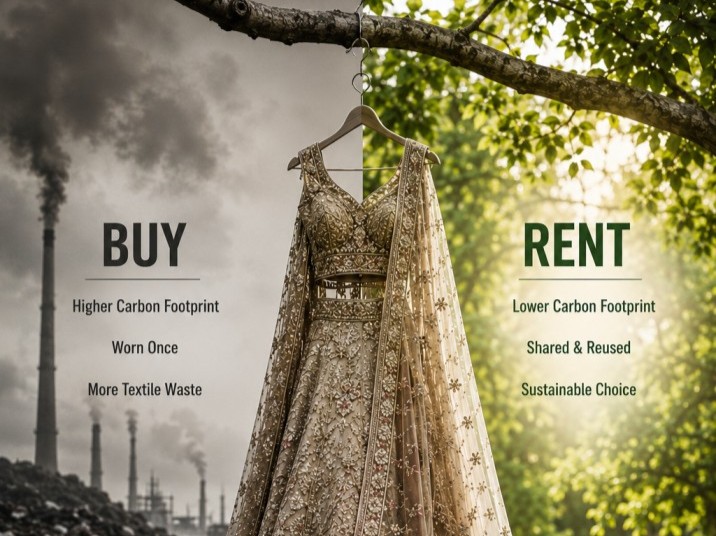
A bridal lehenga may be worn for just one day, but its environmental impact lasts much longer.
What is a Carbon Footprint?
A carbon footprint refers to the total amount of greenhouse gases released into the atmosphere as a result of producing, transporting, using, and disposing of a product.
When it comes to fashion, every stage of a garment's lifecycle contributes to its environmental impact. From manufacturing fabrics and dyeing materials to embroidery, packaging, transportation, and storage, each process consumes energy and resources.
Wedding lehengas, especially designer pieces, often have a significantly higher carbon footprint because of the materials, craftsmanship, and production processes involved.
Why Does a Bridal Lehenga Have a High Environmental Impact?
Bridal lehengas are not ordinary garments. They are often made using luxurious fabrics such as silk, velvet, satin, and organza, along with intricate handwork, embellishments, sequins, beads, and embroidery. Producing these materials requires large amounts of water, electricity, and raw resources. The dyeing and finishing processes can also contribute to pollution if not managed responsibly. Additionally, transporting garments between manufacturers, designers, stores, and customers adds further carbon emissions. The biggest concern, however, is that most bridal lehengas are worn only once or twice before being stored away for years. This means a garment with a high environmental cost delivers very little long-term use.
The fashion industry is responsible for nearly 10% of global carbon emissions, and wedding wear contributes to this through fabric production, dyeing, embroidery, transportation, and packaging. A heavily embroidered bridal lehenga requires significant amounts of water, energy, and resources before it even reaches the bride.
The biggest challenge? Most wedding lehengas are worn only once and then stored away for years.
When you buy a lehenga, a new garment must be manufactured, consuming fresh resources and generating additional carbon emissions. When you rent a lehenga, the same outfit can be worn by multiple brides, reducing the demand for new production and extending the life of the garment.
This simple choice can help reduce textile waste, lower carbon emissions, and support a more sustainable fashion industry without compromising on style.
As more couples embrace sustainable weddings and eco-friendly bridal wear, renting is becoming a smart alternative to buying. After all, the memories last forever even if the outfit doesn't stay in your wardrobe.
Conclusion
Your wedding outfit doesn't have to cost the planet.
By renting a designer lehenga from Rent An Attire, you're choosing luxury with responsibility. You get the look you've always dreamed of while helping reduce fashion waste and the carbon footprint associated with single-use wedding wear.
Wear your dream lehenga. Create timeless memories. Leave a lighter footprint.